|
|
Solar Cells
Solar cells are most often made from silicon. This is due in part to silicon having been an abundant resource. But it is also because silicon is atomically apt for the life of a solar cell.
A silicon atom has four electrons in its outer shell, but it "wants" to have eight. Therefore, one silicon atom will bond with four other silicon atoms. This fills up its outer shell and creates a very strong crystalline solid.
Of course, to be a good conductor of solar energy, solar cells must have electrons that are free to move about. For this reason, both phosphorous and boron are added. Phosphorous has five electrons on its outer shell. This means that when it bonds with silicon, there is one extra electron. Boron, on the other hand, only has only three outer shell electrons. When it bonds with silicon, there is an electron "hole."
So solar cells are made not just of silicon, but a silicon/phosphorous layer and a silicon/boron layer. When these two layers are sandwiched together, the free electrons of one layer all rush to fill the empty electron spaces of the other. The creates an electric field. When the photons from sunlight hit the solar cell, extra electrons are knocked off their orbits and holes are filled. This is how solar electricity is created.
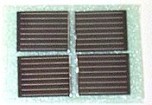
Regular Price: $19.44
ONLY: $14.95
|
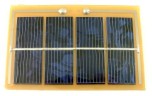
Regular Price: $23.34
ONLY: $17.95
|
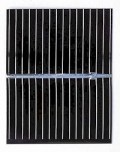
Regular Price: $29.84
ONLY: $22.95
|
|
|